
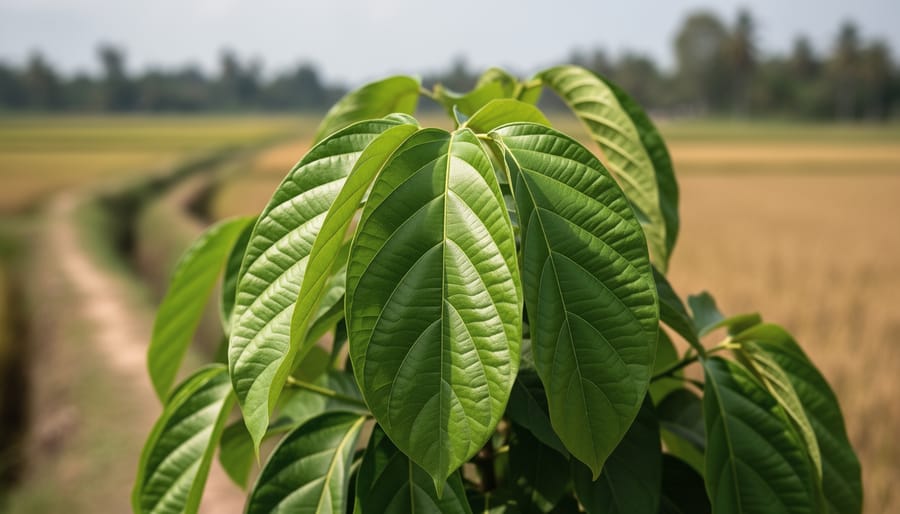
Kratom’s history stretches back centuries in Southeast Asia, where indigenous communities in Thailand, Malaysia, and Indonesia first discovered the medicinal and energy-boosting properties of Mitragyna speciosa leaves. Long before Western botanists catalogued the plant in the 1830s, rural workers chewed fresh kratom leaves to combat fatigue during long days in rice paddies and fishing villages, while traditional healers incorporated it into folk medicine for pain relief and digestive ailments.
The plant remained largely unknown outside its native region until Dutch colonial botanist Pieter Korthals formally classified it in 1839, naming it after the shape of its leaves, which resembled a bishop’s mitre. For the next century, kratom stayed confined to academic journals and colonial records, with occasional mentions in ethnobotanical surveys documenting Southeast Asian traditional practices.
Kratom’s journey to North America began quietly in the late 20th century through ethnobotany enthusiasts and alternative medicine circles, but it wasn’t until the early 2000s that online communities sparked wider interest. Much like Manitoba’s story of cultural evolution and adaptation, kratom’s path from ancient tradition to modern context reflects changing attitudes toward plant-based wellness across different societies.
Today in 2026, kratom occupies a complex position globally. Some countries have embraced regulation while others maintain restrictions, creating a patchwork of legal frameworks that continue to evolve as researchers examine its alkaloid compounds and potential applications. Understanding this historical arc helps explain both the enduring appeal and ongoing debates surrounding this controversial botanical.
Ancient Origins: Kratom’s Roots in Southeast Asia
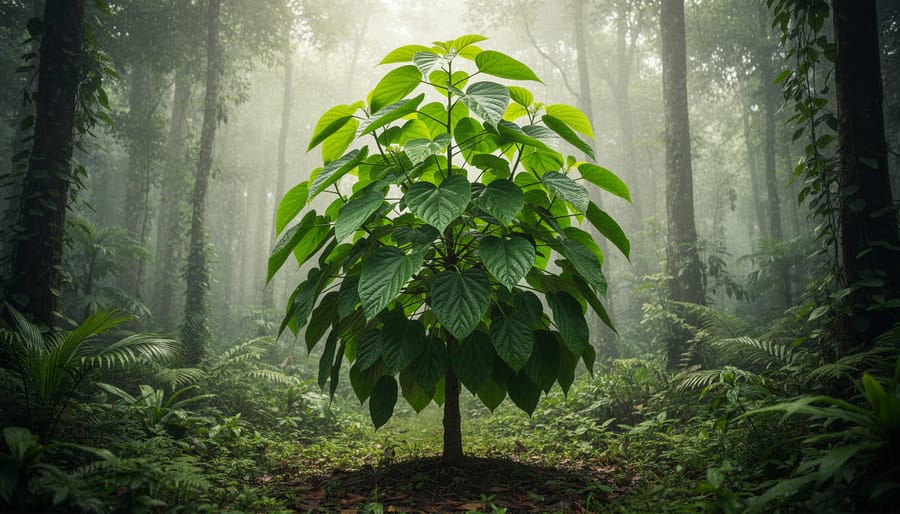
Kratom’s history stretches back centuries in the tropical rainforests of Southeast Asia, where the Mitragyna speciosa tree grew wild and eventually became woven into the fabric of rural life. Indigenous communities in Thailand, Malaysia, and Indonesia developed deep botanical knowledge of this evergreen tree, which thrived in the region’s humid climate and rich soils.
- Mitragyna speciosa
- The scientific name for the kratom tree, belonging to the coffee family (Rubiaceae), formally classified by Dutch colonial botanist Pieter Korthals in 1839.
- Ketum
- The traditional Malay name for kratom, still used throughout Malaysia and parts of southern Thailand where the plant has been harvested for generations.
- Kakuam
- The historical Thai term for kratom, derived from the word for “to chew,” reflecting how leaves were traditionally consumed by agricultural workers.
- Thang
- A regional name used in southern Thailand, particularly among rural farming communities who incorporated the plant into their daily routines.
Local farmers recognized kratom trees by their distinctive glossy leaves and understood which mature trees produced the most potent foliage. Traditional harvesting involved careful selection of leaves from trees at least several years old, with experienced gatherers knowing precisely when leaves reached optimal maturity. Workers would climb trees or use long poles to pluck individual leaves, leaving younger growth intact to ensure the tree’s continued health.
In Thai and Malaysian agricultural communities, the knowledge of kratom formed part of an oral tradition passed from generation to generation. Farmers working in rice paddies, rubber plantations, and fishing villages kept mental maps of where wild kratom groves grew and which cultivated trees in their villages were ready for harvest. This botanical expertise was practical rather than ceremonial, rooted in the daily rhythms of rural Southeast Asian life.
The formal Western documentation began when Dutch and British colonial botanists encountered the plant during 19th-century expeditions. Korthals’s 1839 classification gave kratom its scientific identity, though local communities had understood its properties long before European researchers arrived with their taxonomy systems and field journals.
Traditional Uses and Cultural Significance
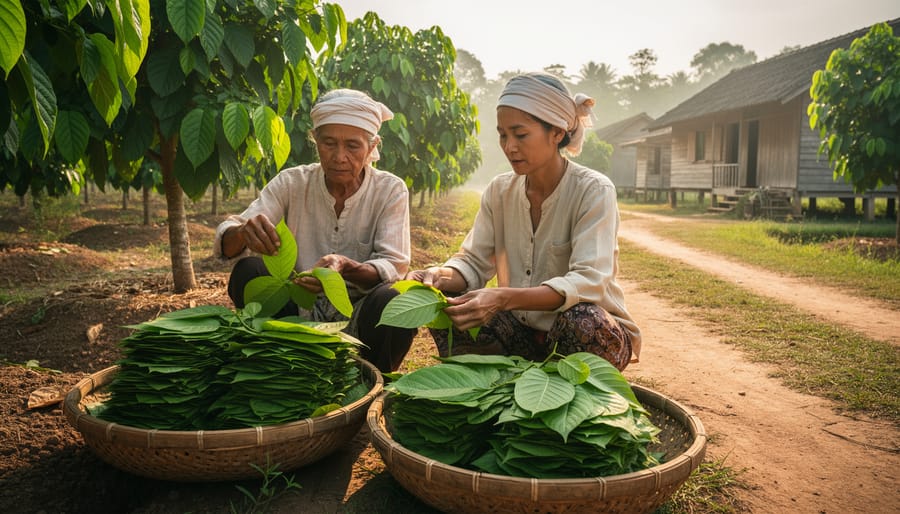
In the tropical forests of Thailand, Malaysia, and Indonesia, kratom emerged as far more than a plant, it became a practical companion for daily survival and a carrier of cultural traditions passed down through generations. Agricultural laborers chewed fresh kratom leaves during long days in rice paddies and rubber plantations, relying on the practice to endure physically demanding work under intense heat. This wasn’t ceremonial or mystical; it was functional knowledge rooted in observation and necessity.
Village elders transmitted detailed understanding of kratom through oral instruction: which trees produced the most potent leaves, optimal harvesting times based on leaf maturity, and preparation methods that varied by region and intended use. In some communities, workers would chew leaves fresh from the tree, while others preferred drying them first or brewing them into tea. The knowledge included identifying the right Mitragyna speciosa specimens and understanding seasonal variations in the plant’s characteristics.
Beyond labor contexts, kratom appeared in folk medicine practices where traditional healers incorporated it into broader botanical treatments. Some communities integrated the plant into social gatherings, though its primary role remained utilitarian rather than ceremonial. Indigenous groups developed sophisticated classification systems, distinguishing between different leaf vein colors and growth conditions, each believed to produce distinct effects.
This generational expertise created a living archive of botanical knowledge, with each community developing region-specific practices shaped by local climate, agricultural demands, and available resources. The plant’s integration into daily rhythms meant children grew up observing its use, absorbing practical wisdom about harvesting, preparation, and application long before Western scientists documented the tree’s existence.
Western Discovery and Scientific Documentation
The story of kratom entering Western scientific consciousness began in the 1830s when Dutch colonial botanist Pieter Korthals encountered the tree in what is now Malaysia. Korthals observed local communities using the plant and collected specimens for formal study, becoming the first European researcher to document Mitragyna speciosa in botanical literature. His initial descriptions noted the tree’s distinctive leaf structure and its place within the coffee family, Rubiaceae, though he didn’t fully grasp its cultural significance at the time.
British surgeon and amateur botanist George Darby Haviland expanded on this work during the 1890s, documenting traditional uses among indigenous populations in Borneo and the Malay Peninsula. Haviland’s field observations provided the first Western accounts of how local workers chewed fresh leaves during agricultural labour, offering ethnographic context that pure botanical classification couldn’t capture. His notes described the harvesting practices and preparation methods he witnessed, creating an early bridge between indigenous knowledge and Western scientific curiosity.
The alkaloid chemistry that would later dominate kratom research didn’t emerge until 1921, when chemists E. Field and I.H. Beckett successfully isolated mitragynine, the plant’s primary active compound. This breakthrough at the University of London marked the beginning of pharmacological interest, though detailed analysis of kratom’s complex alkaloid profile wouldn’t accelerate until laboratory technology advanced in subsequent decades. Early chemical studies laid groundwork that researchers would revisit throughout the twentieth century, gradually mapping the plant’s unique molecular composition.
Kratom’s Journey to North America
Kratom remained largely unknown outside Southeast Asia until the late 20th century. The earliest documented imports to North America occurred in the 1990s, when small quantities reached ethnobotanical researchers and collectors interested in traditional plants from around the world. These initial shipments were sporadic, serving niche academic and hobbyist circles rather than any broader market.
The early 2000s marked a turning point. Internet forums dedicated to ethnobotany and alternative wellness began discussing kratom, and a handful of online vendors started offering dried leaves imported from Indonesia and Thailand. Word spread slowly through these digital communities, with curious individuals ordering small amounts to learn about this Southeast Asian botanical firsthand. Canada saw its first notable imports during this period, though kratom remained obscure to most Canadians.
By the mid-2000s, kratom’s presence expanded across both the United States and Canada. Vendors multiplied, and the plant transitioned from an ethnobotanical curiosity to a recognizable name in certain circles. The rise of e-commerce made importing and distributing kratom simpler, and discussions about the plant appeared on wellness forums, podcasts, and eventually mainstream news coverage.
The 2010s brought kratom into broader public awareness. Media reports, regulatory debates, and growing online communities meant more North Americans encountered the term, even if they knew little about its Southeast Asian origins. Import volumes increased significantly, with shipments arriving regularly from Indonesia, which became the primary source country. By the end of the decade, kratom had evolved from an unknown botanical into a widely recognized, if still contested, presence across the continent, setting the stage for ongoing conversations about its place in modern society.
Regulatory History and Legal Evolution
The regulatory landscape surrounding kratom has shifted dramatically over the past two decades, reflecting evolving scientific understanding and governmental approaches to novel botanical substances. In Southeast Asian nations where kratom grows naturally, regulatory responses varied considerably. Thailand criminalized kratom in 1943 under the Kratom Act, though this prohibition was reversed in 2021 after decades of advocacy highlighting traditional use. Malaysia maintained strict controls, while Indonesia initially regulated kratom minimally despite being a major source region.
Internationally, kratom’s legal status became a patchwork. The United States saw state-by-state variation emerge during the 2010s, with some jurisdictions restricting or banning the substance while federal agencies like the DEA proposed but withdrew scheduling actions following public comment periods. European nations adopted diverse approaches, from outright bans in countries like Sweden and Denmark to unregulated status elsewhere. Australia placed kratom under strict prescription-only controls, classifying it as a Schedule 4 substance.
Canada’s regulatory framework developed through the Food and Drugs Act and Natural Health Products Regulations. Health Canada issued multiple advisories throughout the 2010s warning that kratom products were unauthorized and potentially unsafe. Enforcement actions targeted retailers making health claims or selling kratom for ingestion, while the substance itself wasn’t added to the Controlled Drugs and Substances Act schedule. This distinction meant possession wasn’t criminalized, but commercial sale for consumption remained prohibited.
For Manitoba residents, this regulatory history translates to a clear legal framework: kratom cannot legally be sold or marketed for human use in the province, consistent with federal regulations across Canada. Understanding this evolution helps contextualize current discussions and underscores the importance of consulting official Health Canada communications for the most current regulatory information.
Kratom’s Arrival and Presence in Manitoba
Kratom’s journey to Manitoba follows the same timeline as its gradual appearance across Canada during the 2000s and 2010s. While precise records of when Manitobans first encountered information about this Southeast Asian botanical remain scattered, the province’s growing interest mirrors broader Canadian awareness that intensified through online communities, wellness circles, and evolving conversations about traditional botanicals from other cultures.
Manitoba residents, known for their curiosity about diverse cultural practices and openness to exploring topics beyond local Manitoba highlights began encountering kratom primarily through internet forums, health-focused discussions, and media coverage examining its traditional roots and contemporary regulatory questions. Unlike regions with long-standing botanical import traditions, Manitoba’s engagement with kratom arrived relatively recently and remains largely informational.
The province’s regulatory environment reflects Health Canada’s position: kratom is not approved for sale as a natural health product or food in Canada, and its importation and sale remain subject to federal oversight. This framework shapes how Manitobans interact with information about kratom, generally through educational content rather than widespread local availability.
Today, kratom occupies a unique space in Manitoba conversations, recognized as a botanical with deep Southeast Asian heritage, yet surrounded by ongoing regulatory considerations and evolving public dialogue. Manitobans interested in understanding kratom’s history typically turn to academic sources, botanical literature, and official health channels rather than casual local availability, reflecting both the province’s respect for cultural knowledge and its adherence to Canadian regulatory standards.
Common Questions About Kratom’s History
How long has kratom been used?
Kratom has been used traditionally in Southeast Asia for centuries, with documented practices among agricultural communities in Thailand, Malaysia, and Indonesia dating back generations. While exact timelines are difficult to pinpoint, ethnobotanical evidence suggests kratom use extends back several hundred years within these indigenous cultures.
Where does kratom originally come from?
Kratom is native to Southeast Asia, specifically the tropical forests of Thailand, Malaysia, Indonesia, and Papua New Guinea. The Mitragyna speciosa tree grows naturally in these humid, warm climates where local communities first discovered and began utilizing the plant.
When did kratom reach Canada?
Kratom emerged in North American markets, including Canada, during the early 2000s as global trade expanded and interest in botanical products grew. Its presence became more visible in the 2010s as online commerce made international botanicals more accessible to curious Canadians.
What did traditional cultures use kratom for?
Southeast Asian communities traditionally used kratom leaves in daily agricultural work and cultural practices, with workers chewing fresh leaves during long days in the fields. The plant held a place in folk medicine traditions and some ceremonial contexts, representing knowledge passed down through generations.
How has kratom’s legal status changed over time?
Kratom’s legal status has evolved differently across countries, with some Southeast Asian nations implementing restrictions while Western regulatory approaches have varied. In Canada, Health Canada has maintained specific positions on kratom that have shifted over the years, reflecting ongoing regulatory assessment of botanical products.
Understanding kratom’s history helps Manitobans approach current discussions with context about the plant’s centuries-long journey from tropical forests to global awareness. Those wanting to learn Manitoba context for these broader botanical conversations can explore how global developments connect to local interests. The historical record demonstrates that kratom carries a complex past that informs present-day regulatory considerations and ongoing research efforts.
Kratom’s journey from the rainforests of Southeast Asia to conversations in Manitoba spans centuries of cultural tradition, botanical discovery, and evolving global awareness. What began as a tree known intimately by Thai and Malaysian farmers has traveled through scientific documentation, international commerce, and regulatory scrutiny to become a topic that Manitobans encounter in 2026.
Understanding this historical arc matters. The centuries-old relationship between Southeast Asian communities and Mitragyna speciosa provides essential context for modern discussions about the plant. When we trace kratom from traditional harvesting practices to Western botanical classification, through its arrival in North America and subsequent regulatory developments, we gain perspective on why current conversations about kratom carry such varied viewpoints.
For Manitobans curious about this botanical’s background, the history reveals both continuity and change. Traditional knowledge passed down through generations in Thailand stands alongside contemporary scientific inquiry. Ancient cultural practices contrast with modern regulatory frameworks.
As kratom remains a subject of ongoing discussion in Canada, staying informed through Health Canada, scholarly sources, and reputable botanical references ensures you’re working with accurate information rather than speculation. The history of kratom doesn’t provide simple answers, but it offers the context needed to understand today’s questions thoughtfully.

