
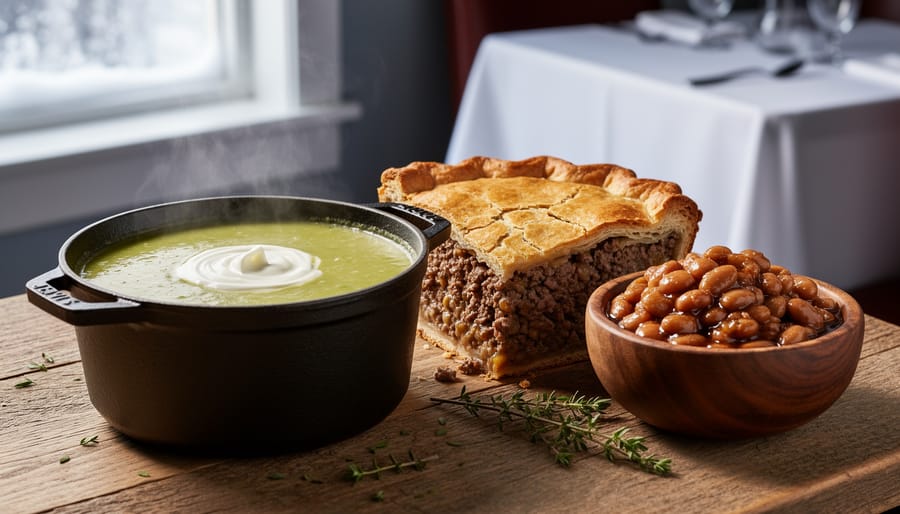
Québécois cuisine is a robust tradition of French-Canadian comfort food built on centuries of resourcefulness, and it has quietly shaped Manitoba’s food story more than most people realize. From the tourtière and pea soup that fortified early fur traders to the poutine that’s become a Saturday night staple across the province, these dishes carry the DNA of voyageurs, Métis communities, and the wave of Québécois settlers who made Manitoba home in the 19th century.
What makes this cuisine so enduring? It thrives on what’s available. Root vegetables that survive harsh winters. Pork transformed into cretons and ragout. Maple syrup harvested from spring runs. Beans simmered low and slow. These aren’t delicate preparations meant to impress at a dinner party. They’re meals designed to feed families through long, cold seasons, and they taste like it: rich, satisfying, unapologetically hearty.
In Manitoba, Québécois food isn’t a museum piece. You’ll find it in family-run diners in St. Boniface, at community halls during winter festivals, and increasingly on menus that celebrate the province’s layered heritage. Understanding this cuisine means grasping how French-Canadian traditions adapted to prairie life, blending with Indigenous ingredients and techniques to create something distinctly ours. It’s comfort food with a story worth knowing.
The French-Canadian Thread in Manitoba’s Culinary Fabric
The story of Québécois cuisine in Manitoba starts in the late 1700s, when French-Canadian fur traders and voyageurs began moving westward from Quebec. These adventurous settlers carried more than just their trading goods, they brought recipes, cooking methods, and food traditions that had sustained their families through harsh Quebec winters. By the 1800s, substantial French-Canadian communities had established themselves along the Red and Seine rivers, most notably in what would become St. Boniface, now a vibrant neighborhood within Winnipeg that still serves as the cultural and culinary heart of French Manitoba.
These early settlers didn’t simply transplant their cuisine, they adapted it. Traditional recipes evolved to incorporate ingredients available on the prairies: bison replaced some beef and pork, local wild berries found their way into pies and preserves, and prairie root vegetables supplemented the familiar turnips and carrots. The famous tourtière, for instance, might include game meats harvested locally, while the fundamental techniques and spice profiles remained true to Quebec traditions.
What makes Manitoba’s Manitoba history particularly fascinating is how French-Canadian food culture didn’t stay confined to specific communities. Intermarriage with Indigenous peoples, Métis traditions, and later waves of immigration created a culinary exchange that enriched everyone’s table. You’ll find Québécois-influenced dishes at country cafés far from St. Boniface, served alongside Ukrainian perogies and Mennonite rollkuchen, reflecting Manitoba’s genuine multicultural food landscape. Today, third, fourth, and fifth-generation French-Canadians continue operating bakeries and restaurants that honor their ancestors’ recipes while embracing Manitoba’s bounty, keeping these traditions alive and accessible to anyone curious enough to explore them.
The Soul of Québécois Cooking: What Makes It Unique
Classic Ingredients You’ll Find Again and Again
The backbone of Québécois cooking rests on ingredients that could survive harsh winters and celebrate brief, abundant summers. Maple syrup stands as the undisputed star, not just a sweetener but a flavor that threads through savory dishes, glazes, and preserves. Pork appears in nearly every form: smoked bacon, salt pork for flavoring stews, ham hocks, and especially the fatty cuts perfect for tourtière and cretons.
Root vegetables like turnips, carrots, and potatoes anchor hearty meals, storing well through long cold months. Dairy runs rich and unapologetic: thick cream, butter by the pound, and squeaky cheese curds that transform poutine from ordinary to essential. Game meats, venison, rabbit, wild duck, bring depth to ragouts and pies, connecting the cuisine to its frontier origins.
Wild berries, especially blueberries and cranberries, bridge tart and sweet in sauces and desserts. These ingredients aren’t exotic or difficult to find in Manitoba. They’re right here, which explains why Québécois dishes feel so natural on prairie tables.
Traditional Cooking Techniques That Define the Cuisine
The cold reality of Quebec’s long winters shaped how generations cooked, and those methods still define the cuisine you’ll taste in Manitoba today. Preservation wasn’t just practical, it became an art form that created distinctive flavors impossible to replicate with modern shortcuts.
Smoking and salting transformed pork into lard salé, the foundation of countless dishes. Pickling preserved vegetables through harsh months when fresh produce disappeared. These weren’t convenience techniques; they were survival skills that developed complex, layered tastes. That depth is why a proper ragoût de pattes can’t be rushed.
Slow-cooking remains sacred in Québécois kitchens. Stews simmer for hours, meat pies bake until pastry shatters at the touch, and tough cuts become fork-tender through patience alone. This unhurried approach concentrates flavors and creates the comfort-food texture that makes these dishes memorable.
The tourtière tradition demonstrates technique passed down through families, each household guards its spice blend and filling ratio. Some use only pork, others mix game meats, but all rely on careful seasoning and proper pastry technique.
Sugar shack practices turn maple sap into syrup through precise boiling, a springtime ritual that’s both culinary skill and cultural celebration.
Iconic Québécois Dishes You’ll Find in Manitoba
Poutine: From Québec Streets to Manitoba Menus
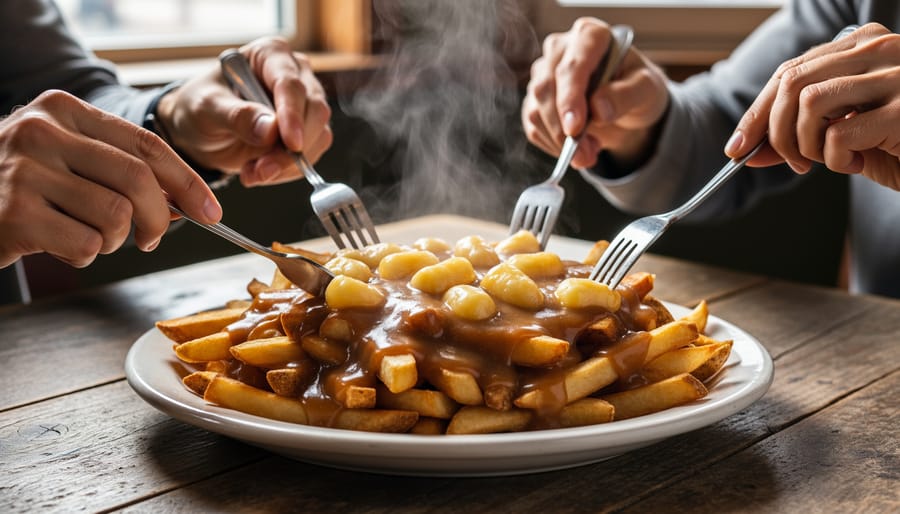
Poutine’s journey from Québec’s rural diners to Manitoba’s restaurant scene tells a story of cultural adoption done right. While every Canadian province now claims a version, Manitoba’s French-Canadian neighborhoods understood the formula from the start: fresh-cut fries with a proper crisp, squeaky cheese curds that refuse to melt entirely, and gravy rich enough to coat without drowning.
The authentic version hinges on timing and temperature. Fries need structural integrity, thick-cut and double-fried works best. Cheese curds must be room temperature or slightly warm, never cold from the fridge, so they soften without liquefying. The gravy, traditionally beef-based with a hint of pepper, should arrive piping hot and in the right quantity. Too little leaves you with dry fries at the bottom; too much creates mush.
Manitoba restaurants now offer creative riffs, pulled pork, Montreal smoked meat, even breakfast versions with hollandaise. These have their place, but purists argue you should master the classic trinity first. The best spots source local cheese curds from Manitoba dairies, sometimes receiving deliveries mere hours old. That squeaky texture against crisp potato and savory gravy isn’t just nostalgia, it’s the textural contrast that made poutine a phenomenon worth crossing provincial borders to experience properly.
Tourtière and the Art of Meat Pies
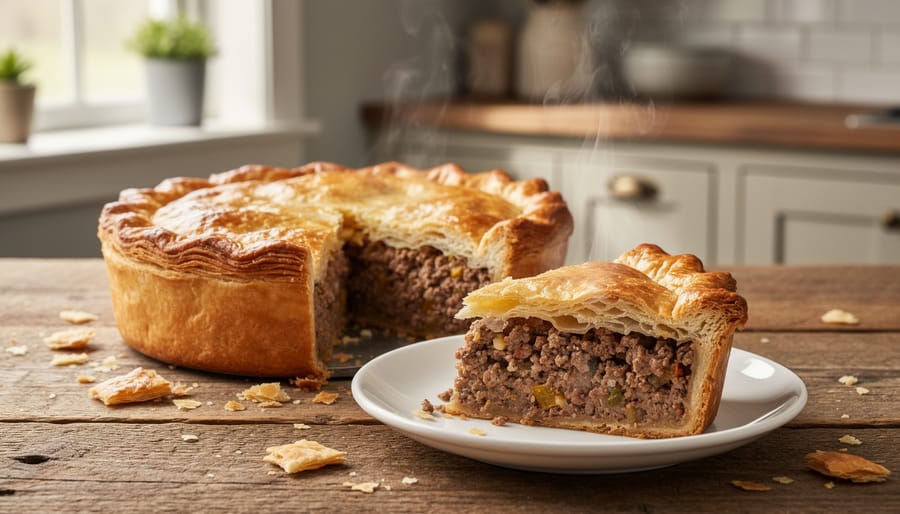
Walk into any French-Canadian home in Manitoba on Christmas Eve, and you will find tourtière at the center of the table. This savory meat pie, with its flaky, buttery crust and spiced filling, is more than comfort food. Tourtière served at Christmas carries generations of tradition, connecting families to their roots through every fragrant bite.
The filling varies by family and region. Most Manitoba versions combine ground pork with beef or veal, seasoned with cinnamon, cloves, allspice, and a touch of savory. Some cooks add finely diced potatoes to stretch the meat and create a softer texture. Others insist on pure meat, densely packed and richly spiced. The balance of sweet warming spices against savory meat defines the pie’s character.
Local bakeries in St. Boniface begin making tourtière in November, freezing dozens for the holiday rush. A few restaurants serve it year-round, often paired with pickled beets or tangy chow-chow relish that cuts through the richness. The best pies have a golden, crisp bottom crust that holds its shape when sliced, and a top crust delicate enough to shatter under your fork.
Beyond the Basics: Lesser-Known Québécois Treasures
Once you’ve conquered poutine and tourtière, Manitoba’s French-Canadian kitchens reveal a deeper repertoire. Ragoût de pattes, a slow-simmered stew of pork hocks and meatballs in cinnamon-spiced sauce, turns up at family-run bistros during colder months, the kind of dish grandmothers guard fiercely. Cipaille, a layered meat pie with game and potatoes under flaky pastry, occasionally appears as a weekend special when a chef wants to showcase old-school technique. For the truly adventurous, oreilles de crisse (fried pork rinds, literally “Christ’s ears”) offer salty, crackling indulgence that pairs dangerously well with beer. Ask servers about off-menu heritage dishes. Many establishments keep these recipes alive for regulars who remember them from childhood, and they’re often thrilled when someone orders beyond the standards.
Where to Experience Québécois Flavors in Manitoba
St. Boniface: The Heart of French-Canadian Dining
St. Boniface stands as Manitoba’s most concentrated hub of French-Canadian culinary tradition, where century-old regional cultural roots translate directly onto your plate. This historic Winnipeg neighborhood, just across the Red River from downtown, houses bakeries where tourtière recipes haven’t changed since the 1940s and bistros serving poutine with locally-made cheese curds that squeak exactly as they should.
Walk along Provencher Boulevard and you’ll find family-run establishments where the menu reads like a Québec City restaurant, ragoût de pattes simmering in the kitchen, sugar pie cooling on the counter, and servers who’ll chat in French if you’re up for it. The area’s annual Festival du Voyageur amplifies this culinary scene each February, but year-round dining here offers the real deal: unpretentious, hearty Québécois cooking made by people whose grandparents brought these recipes west. Don’t miss the small boulangeries tucked on side streets, where pain de ménage and butter tarts draw regulars every Saturday morning.
Hidden Gems Beyond Winnipeg
French-Canadian culinary traditions extend well beyond Winnipeg’s borders into smaller Manitoba towns where history left its mark. St. Pierre-Jolys, about an hour south of the city, hosts several family-run establishments serving tourtière and ragoût passed down through generations of Métis families. The village’s annual festival in August brings out homemade meat pies and sugar pie that rival anything you’d find in Québec itself.
Further north, Ste. Rose du Lac’s roadside diners surprise travelers with proper poutine made from hand-cut fries and real cheese curds, while St. Laurent offers smoked fish prepared using French-Canadian techniques brought over in the 1800s. These rural pockets preserve recipes that urban restaurants sometimes overlook, showcasing what makes Manitoba unique a living connection to settler foodways that taste like time travel on a plate.
Bringing Québécois Traditions Home: Manitoba Ingredients Meet French-Canadian Recipes
Discovering Québécois flavours at home doesn’t mean importing everything from Montreal. Manitoba’s agricultural landscape produces many of the same ingredients that define French-Canadian cooking, you just need to know where to look and how to work with the seasons.
Root vegetables form the backbone of countless Québécois dishes, and Manitoba farmers’ markets overflow with turnips, parsnips, carrots, and potatoes from late summer through fall. These store beautifully in cool basements, just as they did for prairie settlers. Local pork from Manitoba producers matches the quality used in traditional tourtières and ragoûts. Many butchers will grind custom blends for meat pies if you ask, or sell the shoulder cuts perfect for slow-braised dishes.
Maple syrup is the trickiest ingredient, but several Manitoba producers now tap local trees, and their syrup works wonderfully in recipes. For authenticity, seek out darker grades (formerly called Grade B, now “Dark Robust”) which carry the assertive flavour traditional recipes expect. Wild game, a Québécois staple, is more accessible here than in most provinces. Venison, elk, and wild boar from Manitoba suppliers can replace the caribou or moose in heritage recipes.
For specialty items and reliable substitutes, consider these Manitoba sources:
- Bulk Barn and specialty grocers stock French mustard, herbes de Provence, and whole spices for tourtière
- Local cheese makers produce cheddar curds essential for authentic poutine
- Farmers’ markets offer seasonal berries that substitute beautifully for Québec varieties in desserts
- European delis in Winnipeg carry proper lard and quality bacon for traditional recipes
- Indigenous-owned businesses sometimes offer wild rice and game meats that align with Québécois cooking philosophy
The real secret is embracing the Québécois approach rather than fixating on exact ingredients. That means cooking with what’s abundant right now, preserving summer’s bounty for winter meals, and never wasting anything. A January tourtière tastes better when you froze your own herbs in August and stored carrots from September’s harvest. Cook a ragoût on a February afternoon when Manitoba pork shoulder is cheapest and your kitchen needs the warmth.
Seasonal adaptation is tradition, not compromise. Québécois cooks have always worked with their region’s rhythms, which makes their cuisine a natural fit for Manitoba kitchens.
The Sweet Side: Québécois Desserts and Sugar Shack Traditions
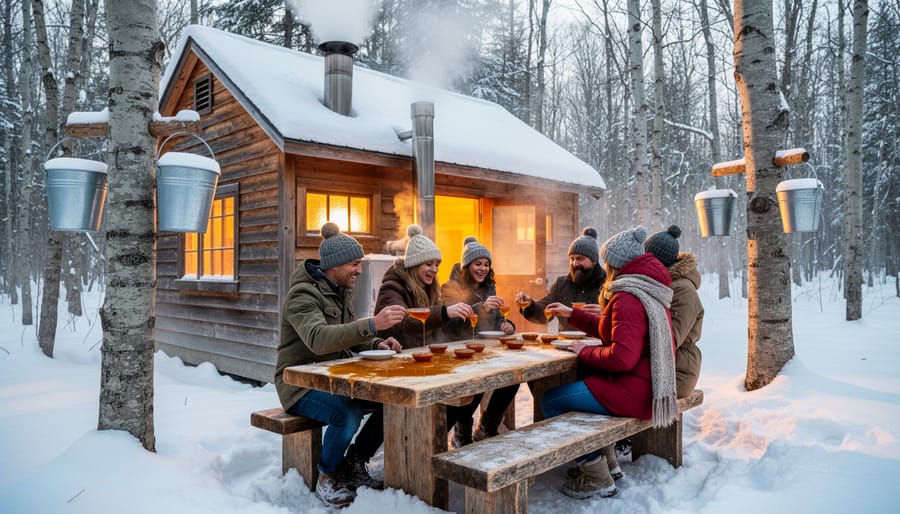
Québécois desserts center on one ingredient above all others: maple syrup. During sugaring season (late February through April), sugar shacks transform sap into liquid gold through time-honored boiling techniques. The crowning treat? Tire d’érable, hot syrup poured over fresh snow, then rolled onto a stick. It’s both candy and theater, part of the complete Manitoba story wherever French-Canadian traditions took root.
Beyond maple, look for pouding chômeur (a Depression-era cake where syrup rises to create its own caramel sauce), grands-pères (dumplings poached in maple syrup), and butter tarts with a distinctly Québécois ratio of filling to pastry. At St. Boniface bakeries, you’ll spot sugar pie, essentially solidified maple cream in a flaky shell, alongside tarte au sucre variations.
Manitoba doesn’t have commercial sugar shacks like rural Québec, but spring events at local French-Canadian cultural centers often feature tire d’érable demonstrations. Some restaurants offer maple-forward dessert menus during sugaring season, celebrating the harvest even without the shack. A few rural properties with maple groves host private tapping experiences, though they’re harder to find than their eastern counterparts.
The takeaway: Québécois sweets aren’t subtle. They’re unapologetically rich, maple-drenched, and meant for sharing after a heavy meal.
Manitoba’s food scene tells a story deeper than any single dish, it’s about communities coming together, traditions crossing borders, and flavors that have survived and thrived for generations. Québécois cuisine isn’t just visiting Manitoba’s tables; it has earned a permanent seat through centuries of shared history, from the early days of French-Canadian settlement to today’s thriving St. Boniface bistros and sugar shack celebrations.
When you dig into a steaming tourtière at a local restaurant or drizzle Manitoba-made maple syrup over your breakfast, you’re tasting that connection. These aren’t imported trends. They’re living traditions that reflect who we are as Manitobans, a province where cultures meet, merge, and create something authentically our own.
Understanding Manitoba’s food identity means appreciating how Québécois traditions have shaped what we eat and how we gather around the table. So next time you’re deciding where to dine, seek out those French-Canadian classics. Order the ragoût. Try the sugar pie. Ask about the family recipe behind that meat pie. You’re not just enjoying a meal, you’re participating in Manitoba’s ongoing culinary conversation, one delicious bite at a time.

